 EN
EN
 INA
INA
Conservation Synergy: Unud Biology Collaborates with MERO Foundation and Bali Safari in Strategic Guest Lecture
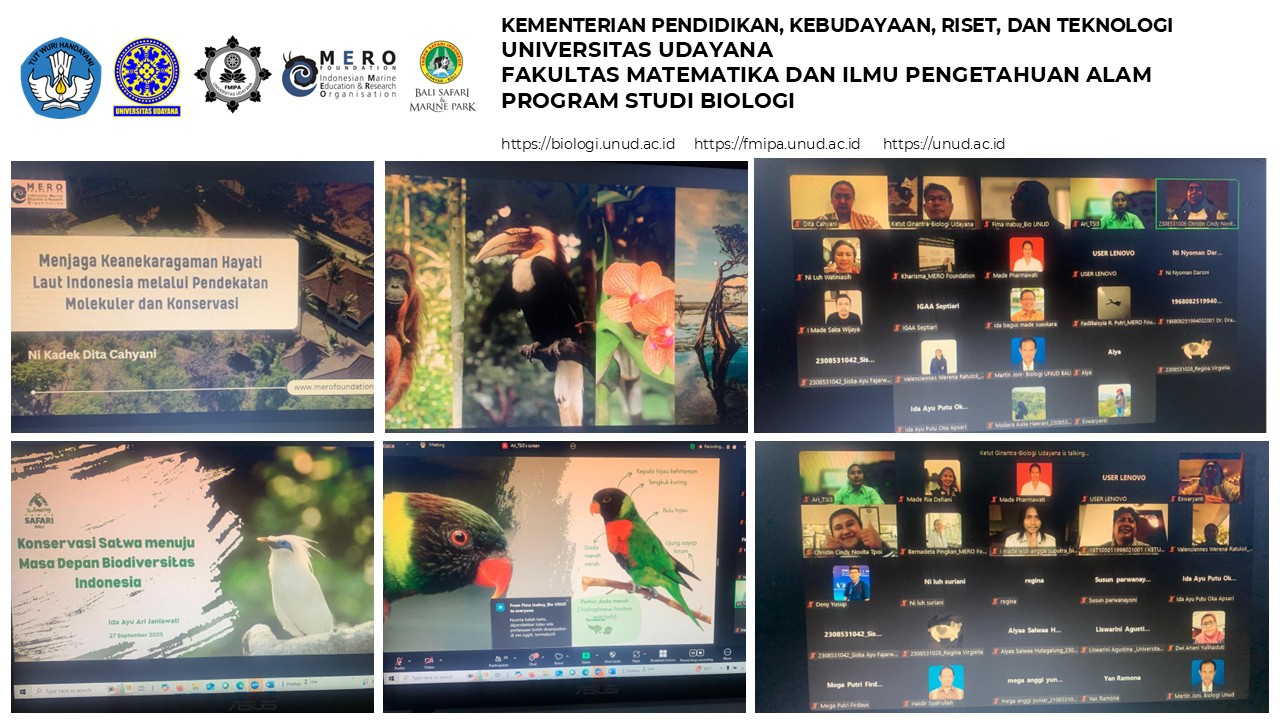
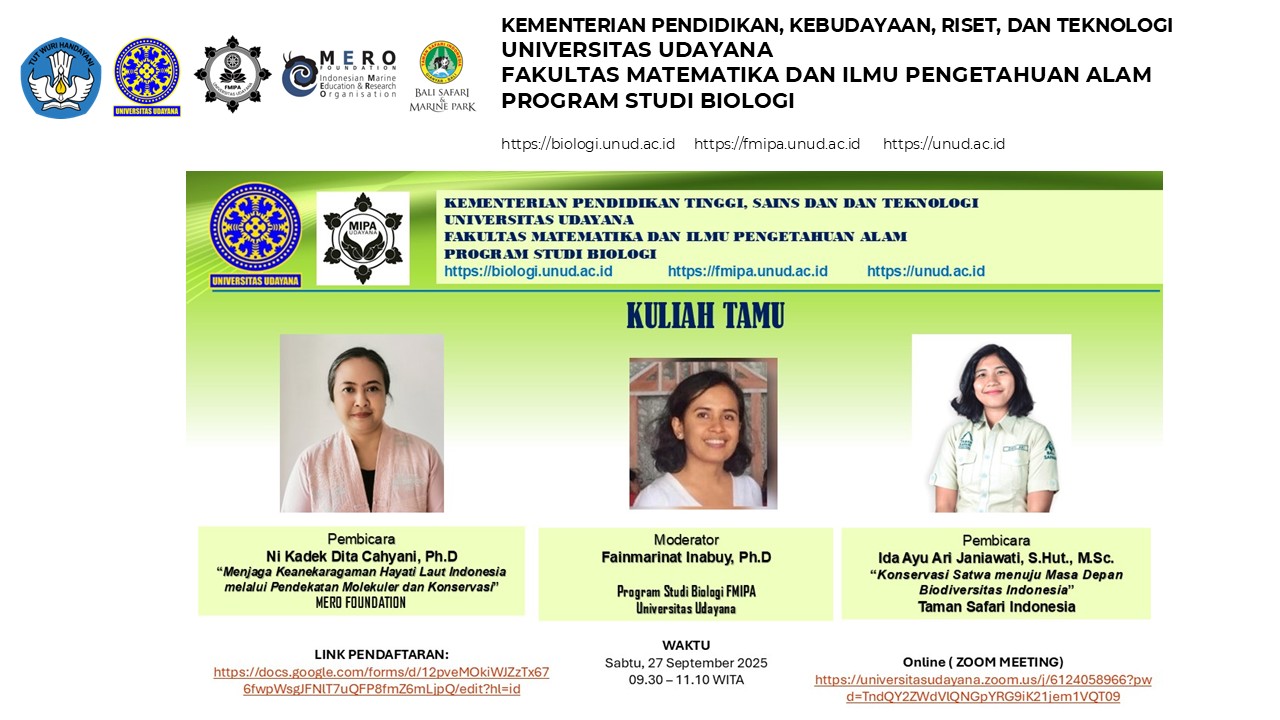
BUKIT JIMBARAN – The Biology Study Program, Faculty of Mathematics and Natural Sciences (FMIPA), Udayana University, has once again demonstrated its commitment to expanding academic horizons by hosting a high-level guest lecture focused on the preservation of Indonesia’s biodiversity on September, 17th, 2025. Conducted via Zoom Video Conference, the event brought together leading experts from the MERO Foundation and Bali Safari and Marine Park (Taman Safari Indonesia) to engage with hundreds of students and faculty members across the Bachelor, Master, and Doctoral Biology programs.
The event was officially inaugurated by the Coordinator of the Biology Study Program, Prof. Dr. I Ketut Ginantra, S.Pd., M.Si. In his opening remarks, Prof. Ginantra—who also oversees the university's commitment to professional biodiversity management—emphasized that the understanding of biodiversity must transcend traditional textbooks. "We require perspectives from field practitioners to understand how biological science is implemented in real-world, sustainable conservation scales," he stated.
The discussion, expertly moderated by Fainmarinat S. Inabuy, Ph.D., a senior lecturer within the department, began with a compelling presentation by Ni Kadek Dita Cahyani, Ph.D., representing the MERO Foundation. Under the topic "Maintaining Indonesian Marine Biodiversity through Molecular and Conservation Approaches," Dr. Dita explored the crucial role of molecular biology in mapping Indonesia's vast marine wealth. She explained how genetic and molecular approaches allow researchers to identify species with high precision, understand population structures, and detect the presence of rare or invasive species that are often difficult to observe visually. This "high-tech" approach is a cornerstone for determining more accurate and effective marine conservation policies in the future.
The second session featured Ida Ayu Ari Janiawati, S.Hut., M.Sc., from Bali Safari and Marine Park. Her presentation, titled "Animal Conservation towards the Future of Indonesian Biodiversity," shifted the focus toward the management of wildlife within ex-situ conservation institutions. Ms. Janiawati detailed the challenges and strategies involved in running a conservation facility as a final stronghold for endangered species. She emphasized that institutions like Bali Safari are not merely recreational sites but serve as vital centers for research, education, and breeding programs aimed at eventually reintroducing animals into their natural habitats. Her insights provided students with a deep understanding of the complexities of wildlife management, which involves balancing animal welfare with global conservation policies.
The enthusiasm of the participants was evident throughout the dynamic interactive discussion. Students from all academic levels raised pertinent questions, ranging from the technical implementation of molecular analysis to opportunities for student involvement in field-based conservation programs.
A significant outcome of this virtual gathering was the mutual commitment to strengthen and extend the existing partnership between the three organizations. The Biology Study Program, MERO Foundation, and Bali Safari officially pledged to continue their collaboration within the framework of the Tridharma of Higher Education, focusing on:
Education: Regular guest lectures and field-based practical training.
Research: Collaborative research initiatives between faculty members, researchers, and field practitioners.
Community Service: Joint environmental education and conservation outreach for the general public.
This guest lecture provided dual benefits. For the students, it served as a vital bridge between academic theory and the realities of the "green industry." For the institution, it reinforces the position of the Biology Study Program at FMIPA Udayana University as a leading center for biodiversity research in Eastern Indonesia. As the event concluded, the hope is that Unud Biology graduates will not only possess theoretical depth but also remain sensitive to contemporary conservation issues. This collaboration is expected to spark new innovations in safeguarding Indonesia's biological heritage, both on land and at sea.
?

FACULTY OF MATHEMATIC AND NATURAL SCIENCES