 EN
EN
 INA
INA
PT Tirta Investama – Mambal Factory (AQUA) collaborates with the Biology Study Program of the Faculty of Mathematics and Natural Sciences, Udayana University, in monitoring biodiversity in the supported village
Biodiversity has become one of the main considerations in regional development. The decline in ecosystem function due to the loss of biodiversity not only causes local losses but also has the potential to create multiple effects on regional development in the future. Moreover, the impact of biodiversity loss has already shown significant effects in recent decades, such as the increasing rarity of encounters with certain species and the overall decline in ecosystem functions.
PT Tirta Investama – Mambal Factory (AQUA) has several partner villages that focus not only on social activities but also on environmental conservation. To optimize conservation efforts, PT Tirta Investama – Mambal Factory has established a Memorandum of Understanding with Udayana University, followed by a Cooperation Agreement with the Faculty of Mathematics and Natural Sciences (FMIPA). This collaboration is implemented by the Biology Study Program and the Biology Student Association (Himabio) of FMIPA Udayana through the Bali Biodiversity Camp program.
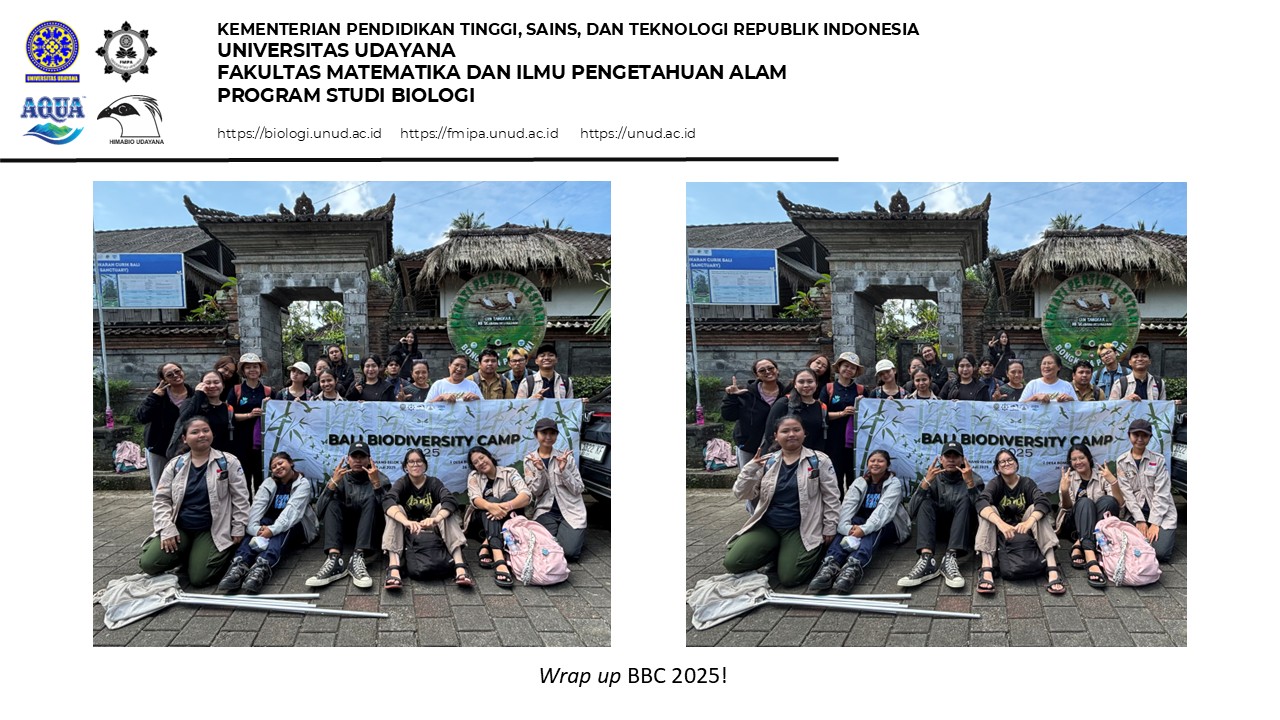
The Bali Biodiversity Camp, better known as BBC, is a program that has been held regularly since 2021 to assist conservation cadres supported by PT Tirta Investama – Mambal Factory in monitoring biodiversity. BBC activities in 2025 consists of three main agendas: a flora and fauna data collection workshop on July 12–13, 2025; biodiversity monitoring in Banjar Jempanang, Belok Sidan Village, Petang District, on July 22–23, 2025; and biodiversity monitoring in Desa Adat Karang Dalem Tua, Abiansemal District, on July 26–27, 2025.
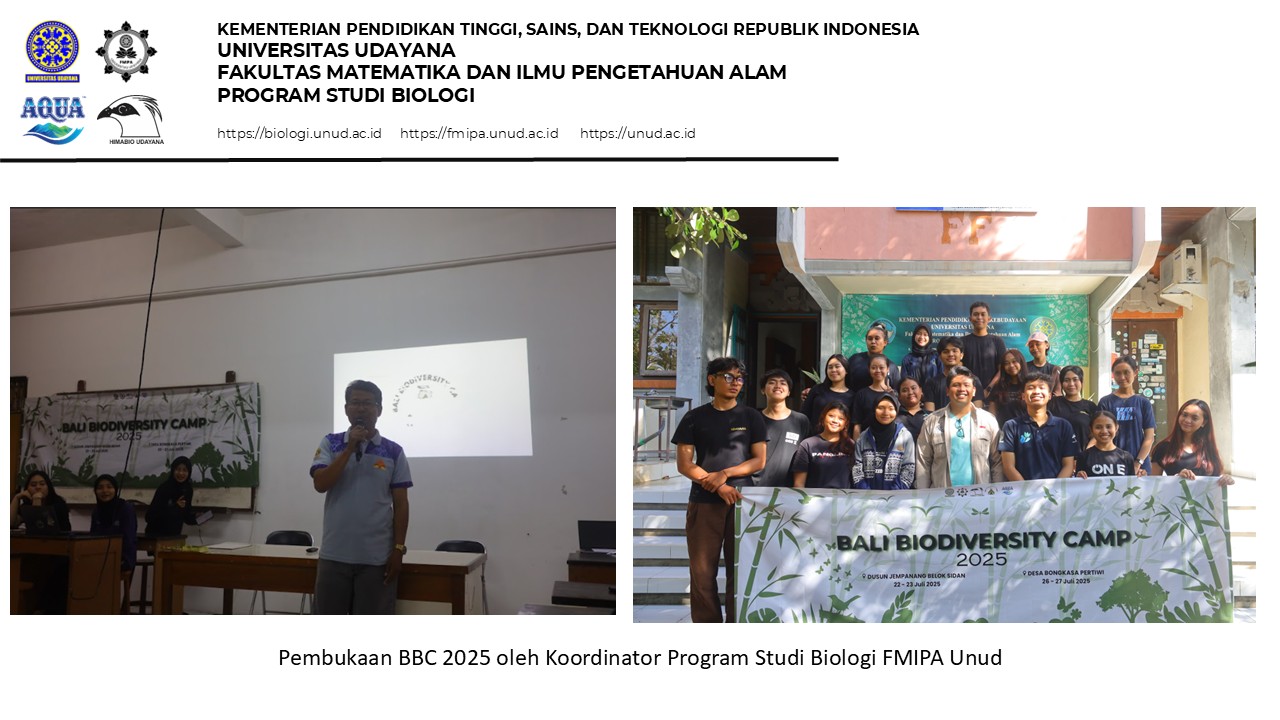
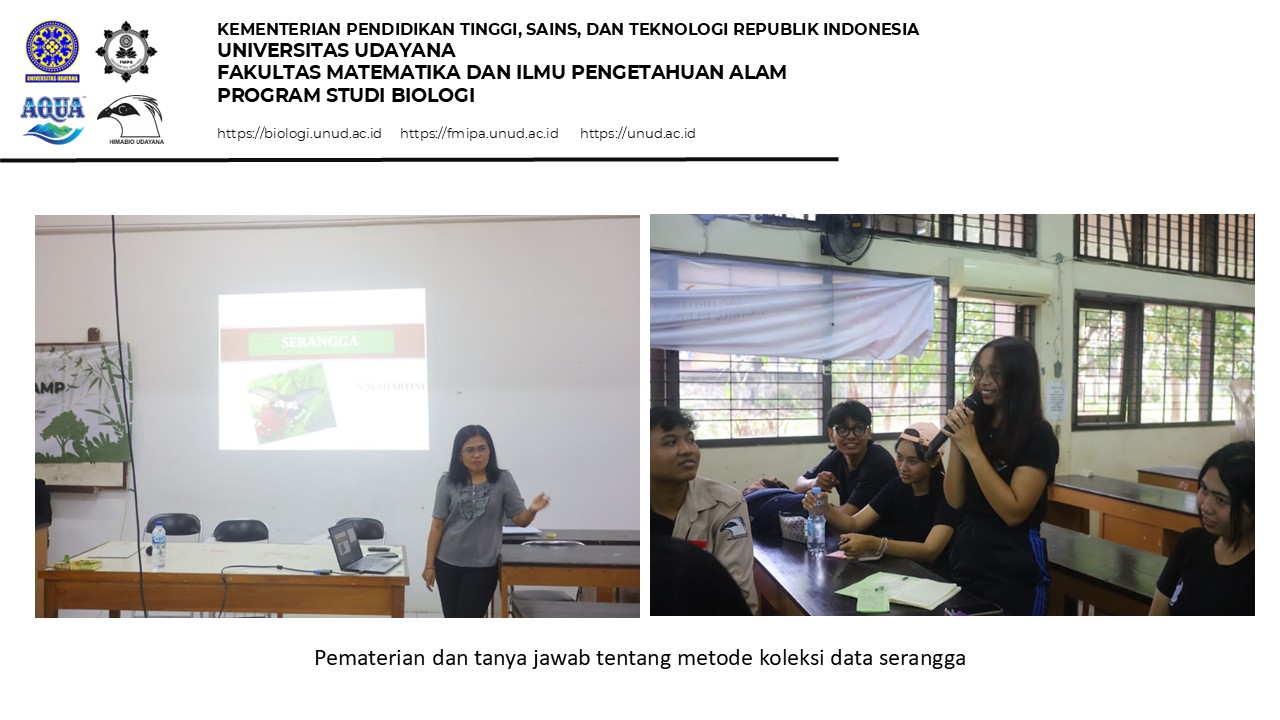
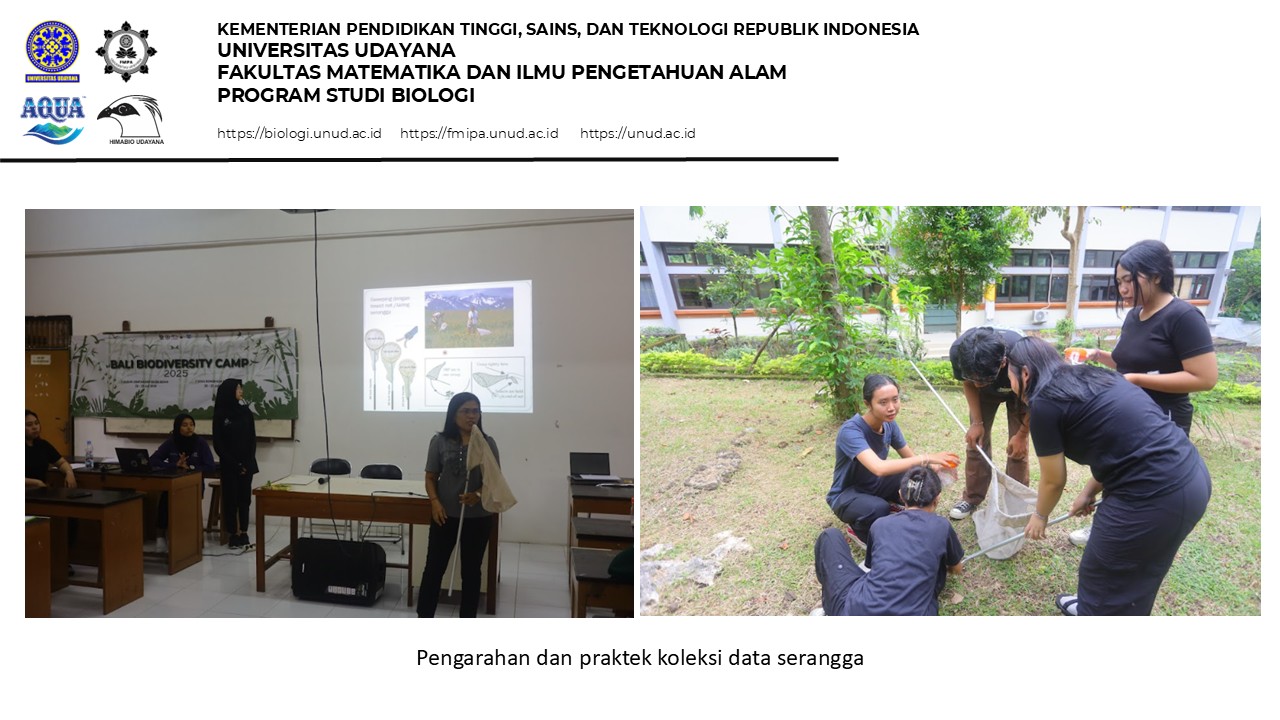
The flora and fauna data collection workshop was held on the Biology Study Program campus of FMIPA Udayana with 25 participants over two days. On the first day, the workshop began with opening remarks from the 2025 Himabio chairperson, Ida Ayu Putu Oka Apsari Widya Putri, followed by an official opening by the Coordinator of the Biology Study Program, Prof. Dr. I Ketut Ginantra, S.Pd., M.Si. After the opening, the first session focused on insect data collection, delivered by Dr. Ni Made Suartini, S.Si., M.Si, and followed by practical activities using sweep nets and insect preservation techniques. The first day concluded with an evaluation of the collected data and notes on areas for improvement.
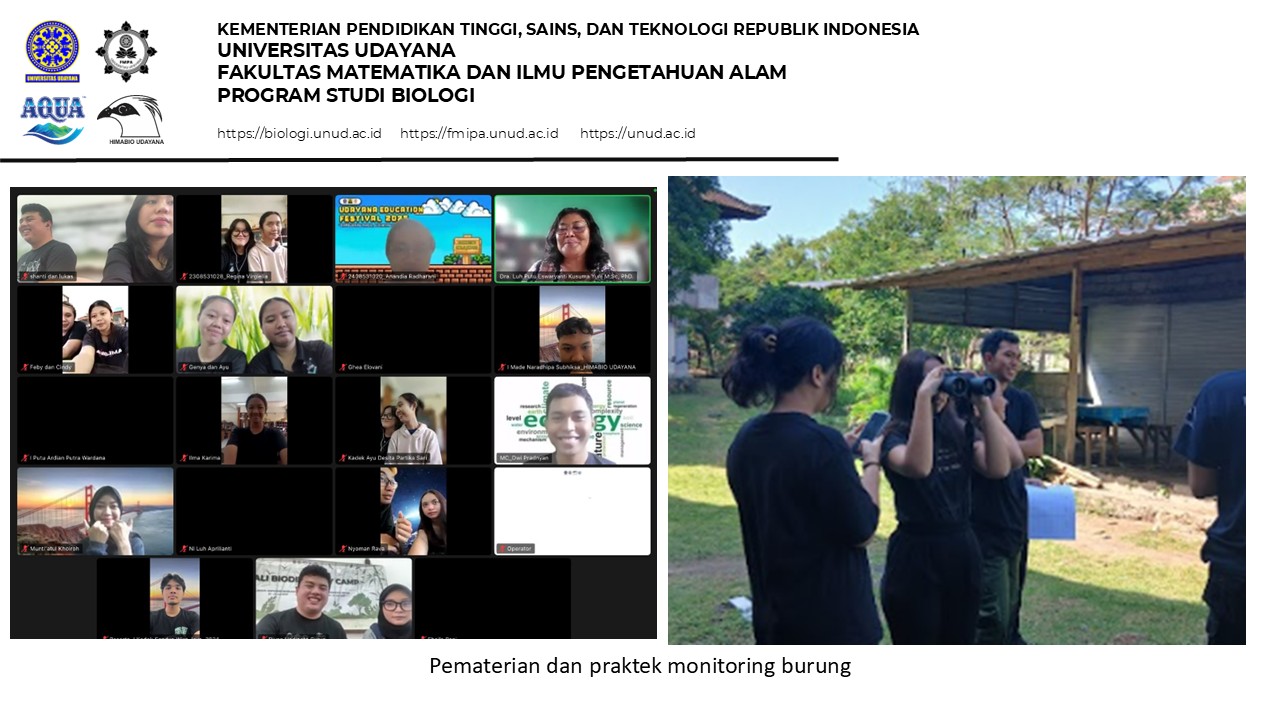
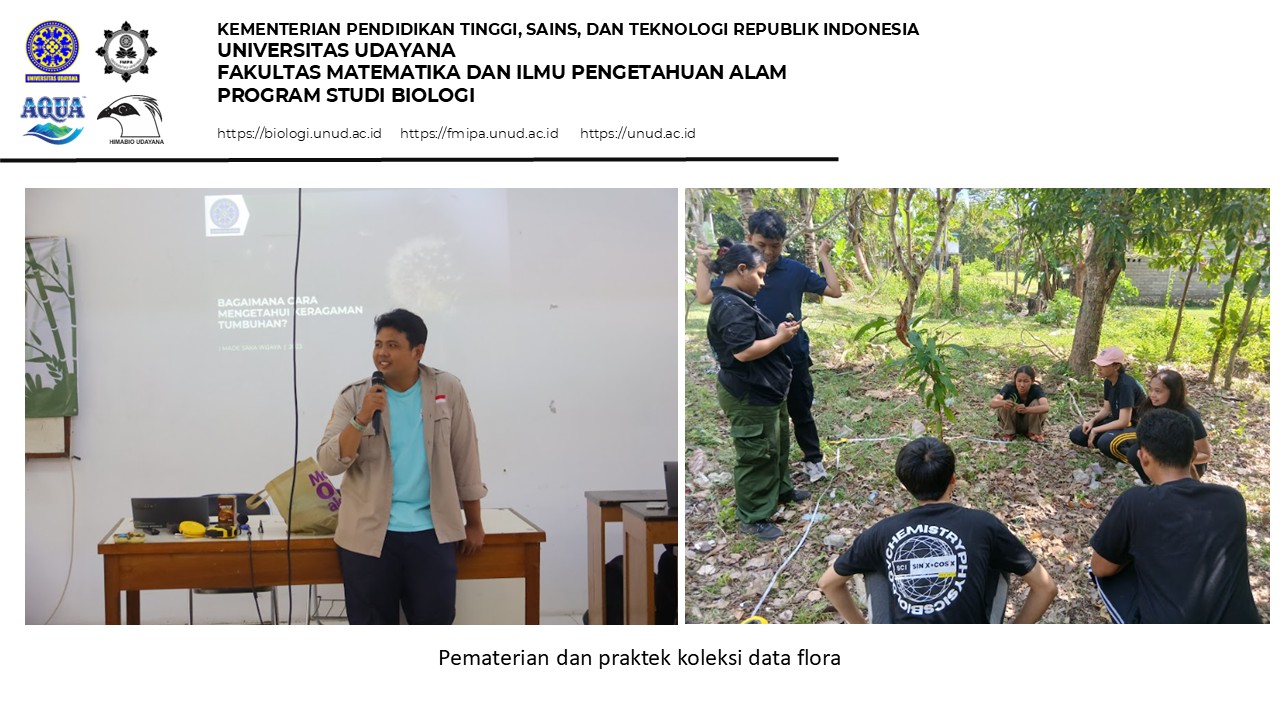
On the second day, the session was led by Prof. Dra. Luh Putu Eswaryanti Kusuma Yuni, M.Sc., Ph.D., who explained how to collect bird data, followed by practice in filling out tally sheets and using binoculars. The next session on flora data was delivered by I Made Saka Wijaya, S.Si., M.Sc., including practical exercises. Flora data collection included recording terrestrial plant diversity and collecting ecological data to assess vegetation conditions in the monitoring area. The field activities around the campus provided participants with insight into the diversity of bird and plant species in the surrounding area.
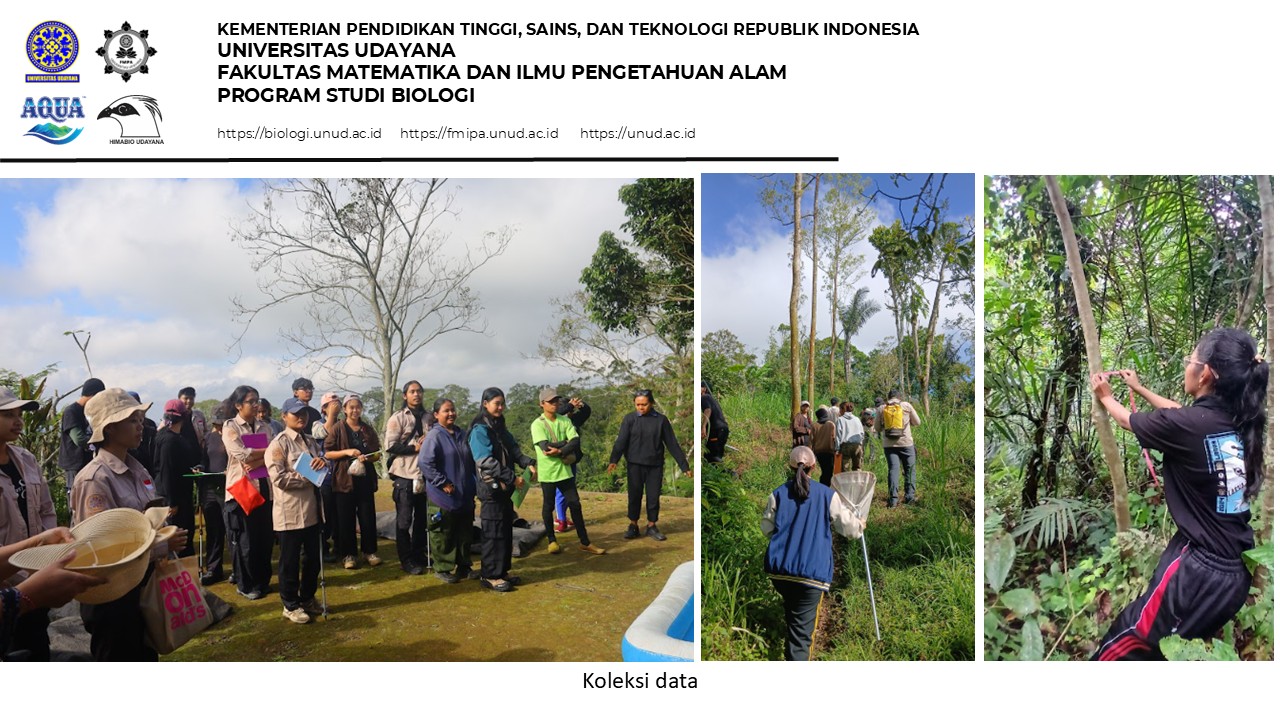
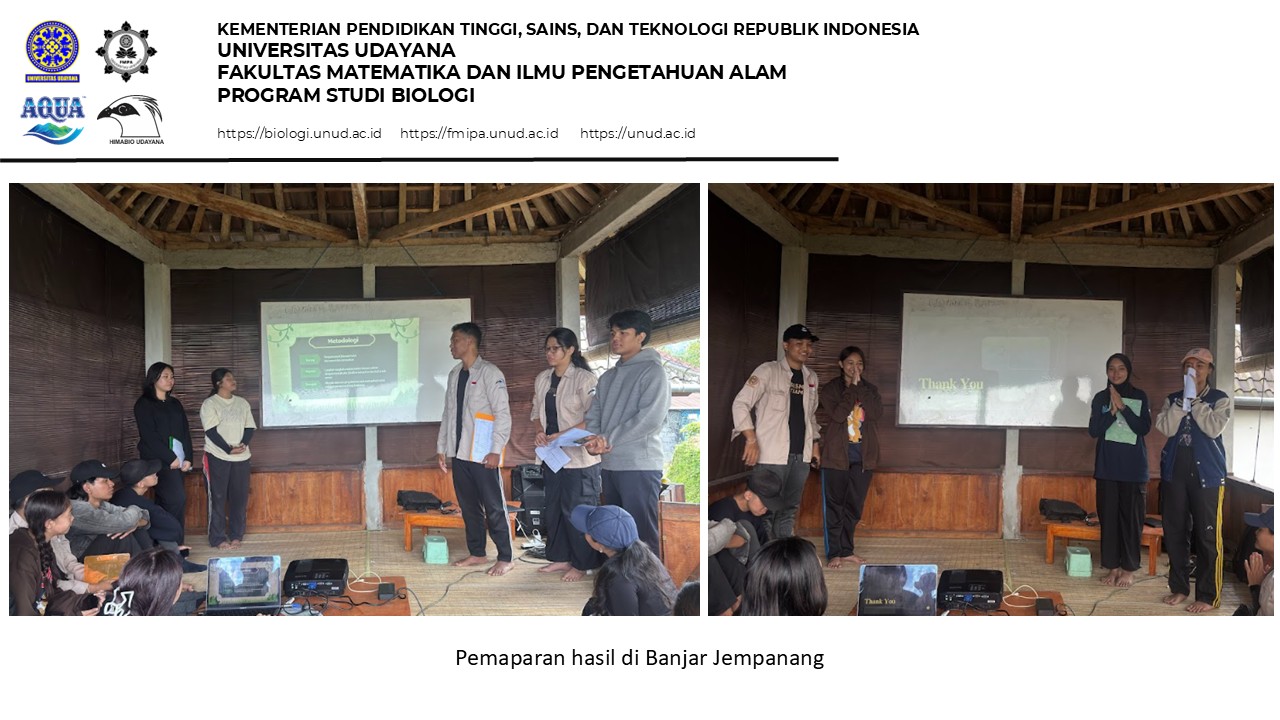
The next event was biodiversity monitoring in Banjar Jempanang, located in Belok Sidan Village, Petang District, Badung Regency. The activities took place over two days, on July 22 and 23, 2025. The first day’s observations left a unique impression on each group. Participants were divided into three groups and explored three types of terrain: forest, coffee plantations, and riverbanks. These different locations showed varying biodiversity levels, prompting discussion among participants about their findings. Before the activity ended, participants presented their monitoring results. Local community members were also involved, providing indirect education on the importance of preserving the environment in Banjar Jempanang. One particularly exciting moment was the group that encountered a crested serpent eagle (Spilornis cheela) soaring above the forest, sparking enthusiasm among the group assigned to the forest area.
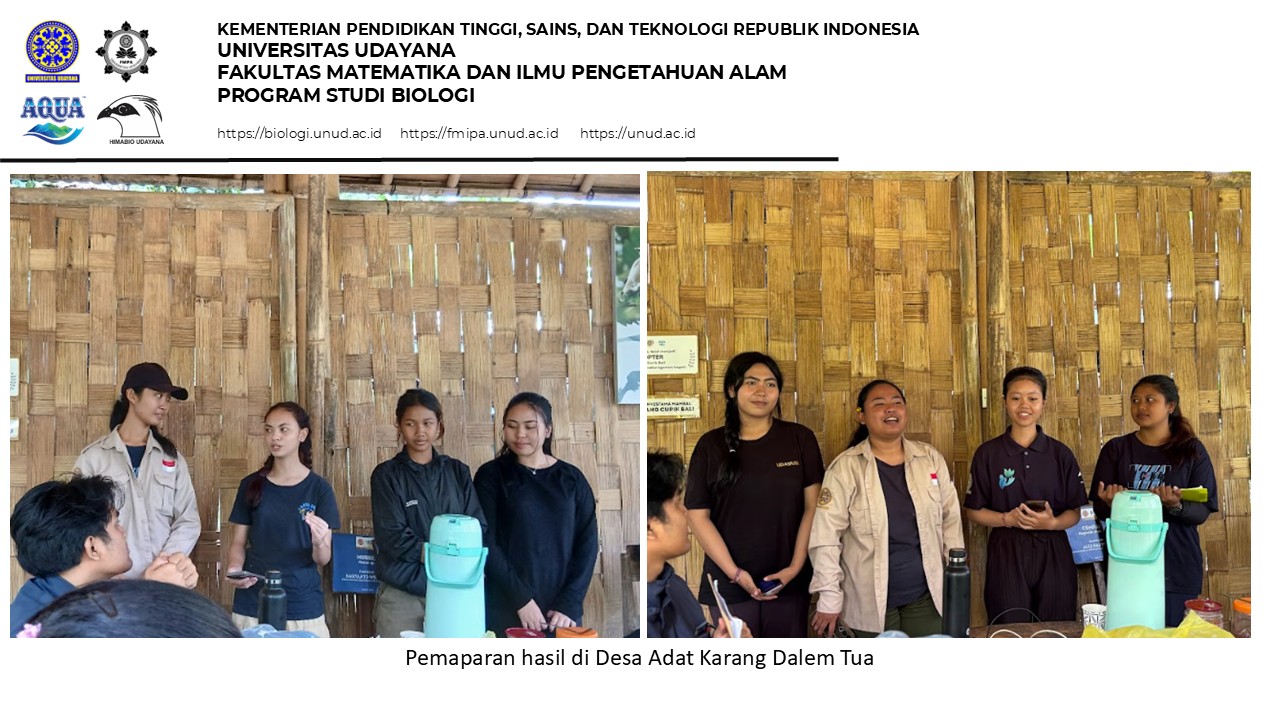
Two days after the Banjar Jempanang activity, monitoring continued in Desa Adat Karang Dalem Tua, located in Abiansemal District, Badung Regency. This two-day event took place on July 26 and 27, 2025. Flora and fauna data collection was conducted in the morning. On the first day, two notable species were found: the grey-cheeked bulbul (Alophoixus bres), identified by its distinctive call and listed as endangered by the IUCN; and the rufous-backed kingfisher (Ceyx rufidorsa), a species that had not been recorded in previous monitoring sessions. On July 27, before concluding the activities, participants presented their findings. The community was again involved, helping to raise awareness about the importance of protecting the environment in Desa Adat Karang Dalem Tua. Participants also introduced rare and increasingly hard-to-find species in Indonesia (especially Bali) to raise public awareness about the current biodiversity crisis in the country. After the presentations and discussions on July 27, 2025, the 2025 BBC event was officially closed by the coordinator from PT Tirta Investama – Mambal Factory.
In general, BBC 2025 activities brought a variety of benefits to both the local community and the students. For the community, the activities deepened their understanding of the high biodiversity potential in the area and the importance of protecting it to maintain ecosystem functions. From the students’ perspective, the program provided technical skills in flora and fauna data collection, teamwork training, and practice in effective community communication. Additionally, students were able to hone their public speaking skills during the presentation of monitoring results to the community.

FACULTY OF MATHEMATIC AND NATURAL SCIENCES