 EN
EN
 INA
INA
Optimizing the Potential of Tengkudak Village, Three Levels of the Biology Study Program, Faculty of Mathematics and Natural Sciences, Udayana University (Unud) Collaborate to Build an Educational Tourism Route
PENEBEL, TABANAN – The
Biology Study Program, Faculty of Mathematics and Natural Sciences (FMIPA),
Udayana University (Unud), demonstrated strong synergy. In a concrete effort to
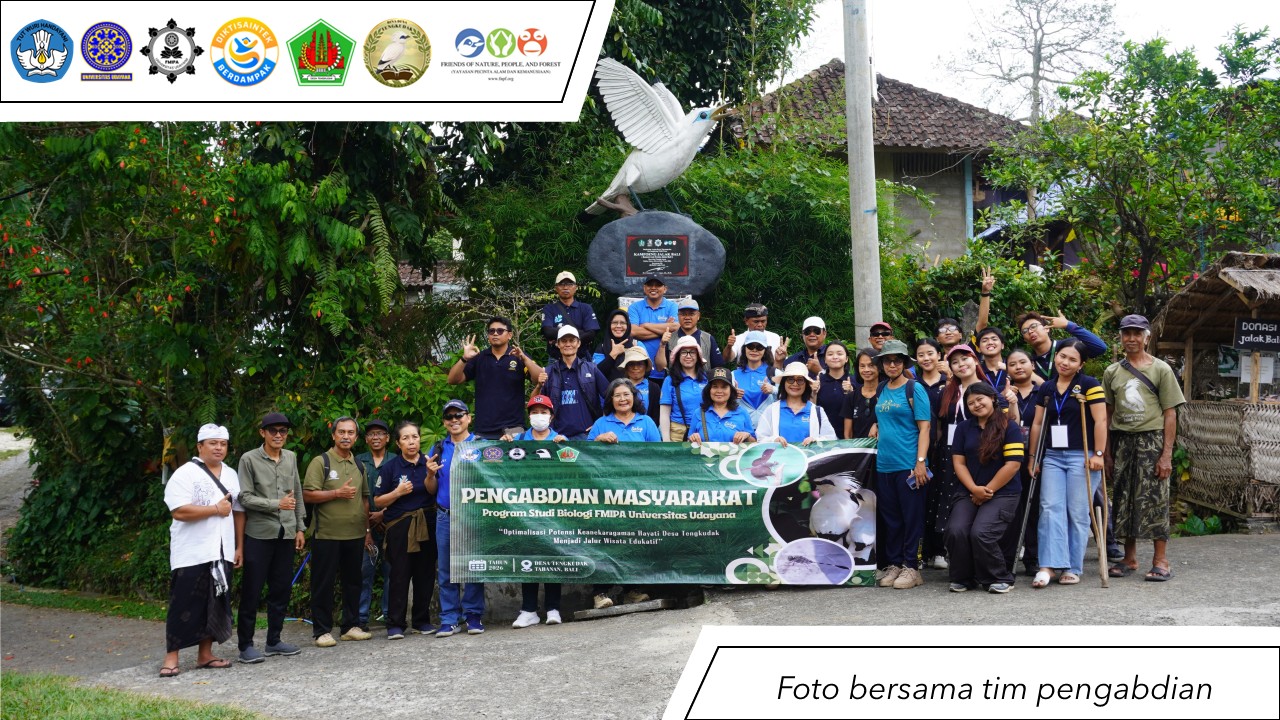
implement the Tri Dharma of Higher Education, three study programs—Bachelor's
(S1), Master's (S2), and Doctoral (S3)—in Biology collaboratively held a
Community Service activity in Tengkudak Village, Penebel District, Tabanan
Regency, Bali, on Sunday, June 21, 2026.
This activity carried the
strategic theme of "Optimizing the Biodiversity Potential of Tengkudak
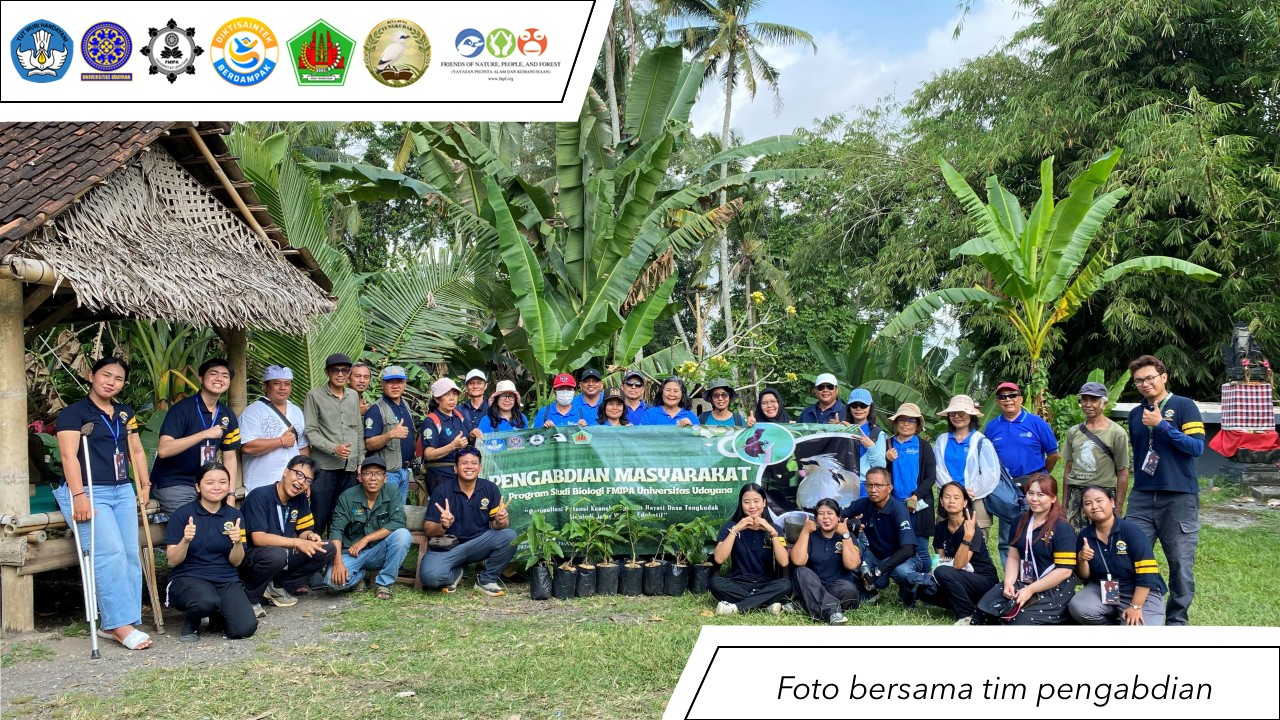
Village into an Educational Tourism Route." The event was attended by the
heads of the study programs, including the Coordinator of the Undergraduate
Biology Program (Prof. Dra. Luh Putu Eswaryanti Kusuma Yuni, M.Sc., Ph.D.), the
Coordinator of the Master's Program (Prof. Dr. Sang Ketut Sudirga, S.Si.,
M.Si.), and the Coordinator of the Doctoral Program (Prof. Drs. Yan Ramona,
M.App.Sc., Ph.D.). The leaders were accompanied by dozens of biology lecturers
and students, and were greeted with great enthusiasm by the Tengkudak Village
community.
Exploration of Educational
Paths and Field Research
The community service program
began with a session introducing local residents to biodiversity to raise
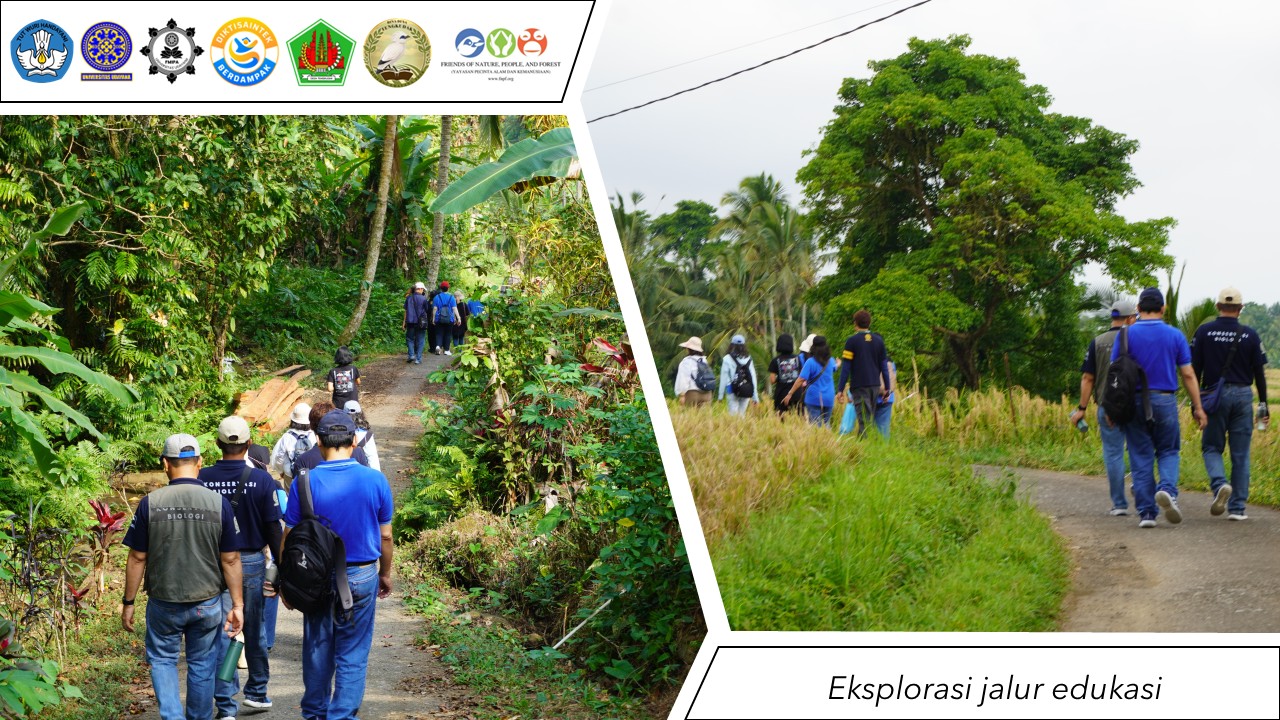
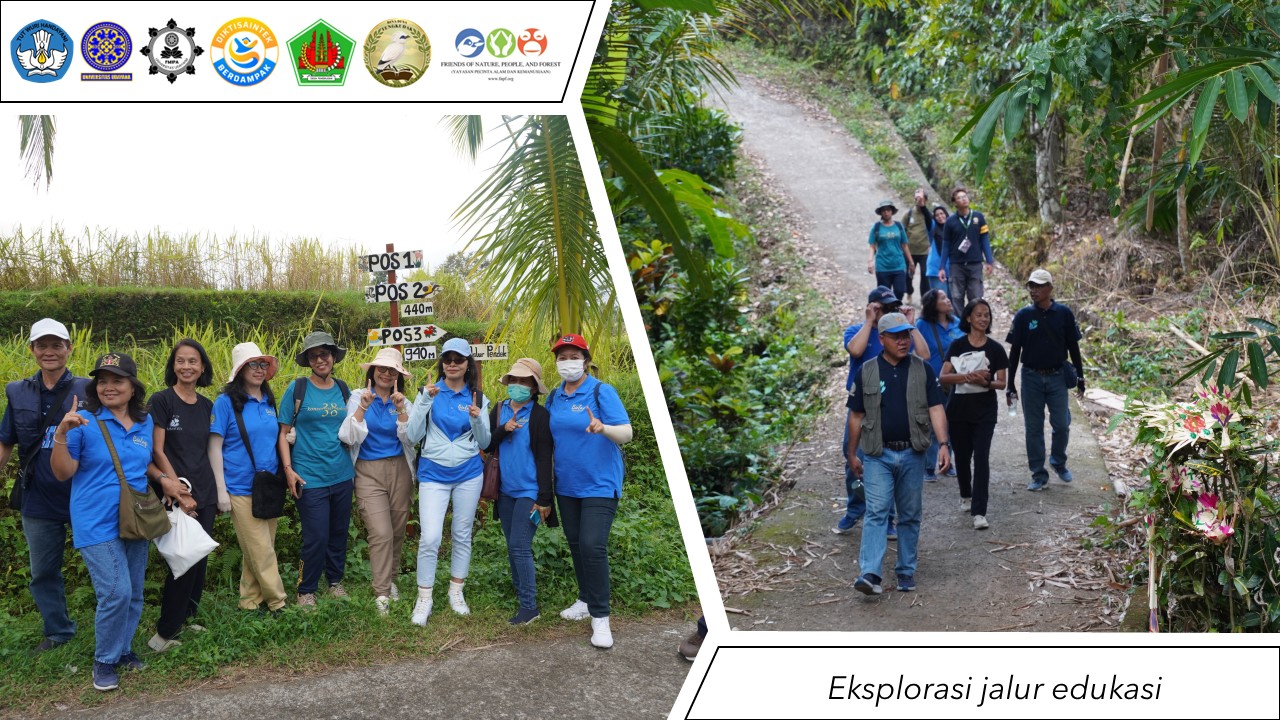
ecological awareness. The event then continued with a village exploration along
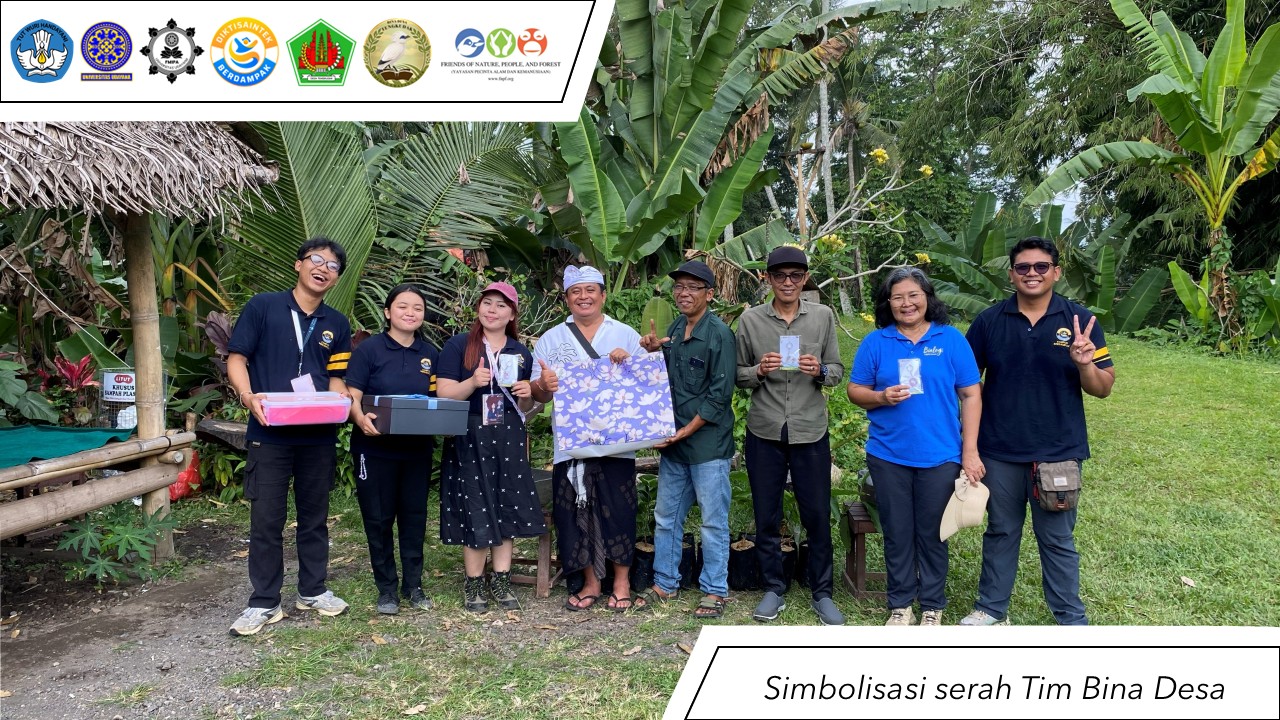
an educational path previously designed and constructed by the Village
Development Team of the Udayana University Biology Study Program.
While traversing the trail, these
historians from various walks of life also conducted direct research on
biodiversity to map the current flora and fauna potential of Tengkudak Village.
This scientific approach was taken to ensure more valid and comprehensive data
for the development of conservation-based educational tourism in the village.
Concrete Action to Preserve
the Bali Myna
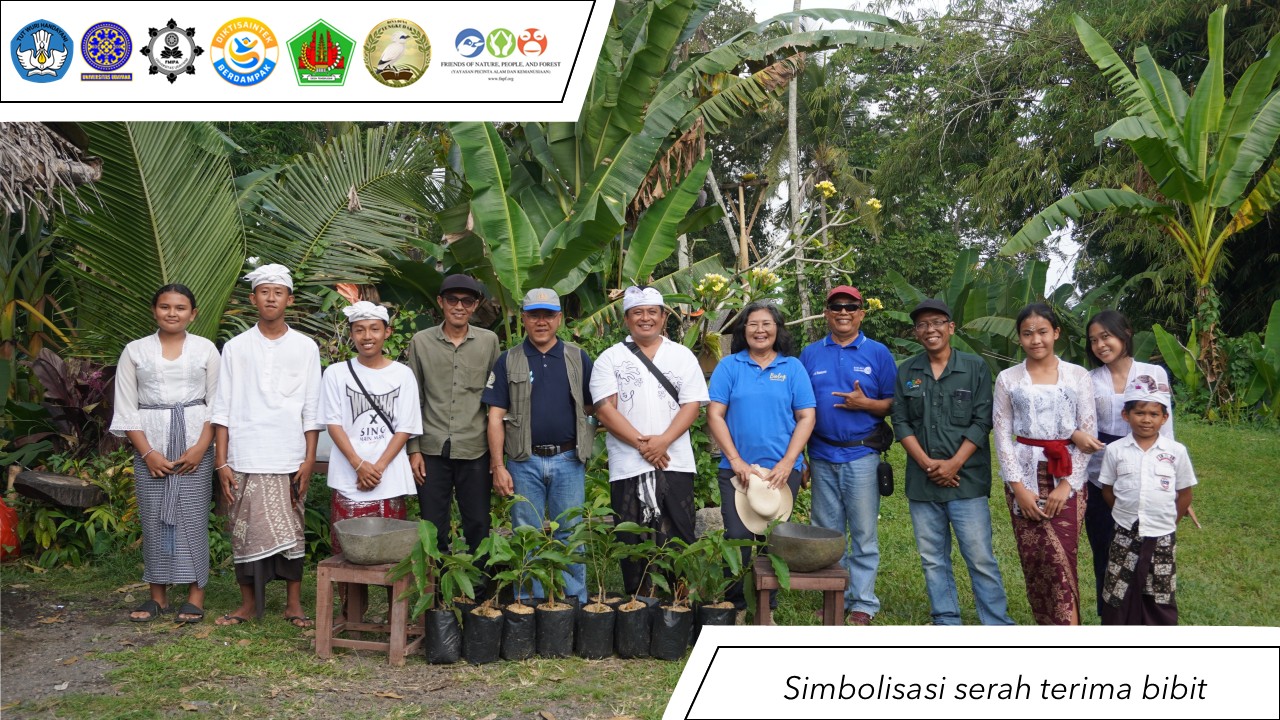
As a concrete contribution to
environmental sustainability and support for the existence of endemic birds and
the conservation of iconic wildlife, the community service team donated several
watering holes for birds and 15 yellow cempaka tree seedlings. This assistance
was specifically directed to support the ecosystem and environmental carrying
capacity of the Bali Myna (Leucopsar rothschildi) habitat, which is
currently being conserved in the village area. The planted yellow cempaka trees
not only serve ecologically as shade trees but also have high aesthetic and
cultural value for the Balinese people.
Hopes and Impact of
Sustainability
This collaborative community
service project, which brings together perspectives from undergraduate students
to the in-depth thinking of doctoral students and biology professors, is
expected to have a long-term positive impact on Tengkudak Village. Through this
educational tourism route, the village's biodiversity is not only
well-preserved from extinction, but its sustainable use can also be optimized
to improve community welfare through the environment-based educational tourism
sector.

FACULTY OF MATHEMATIC AND NATURAL SCIENCES